
The question most people ask after surgery is simple: when can I eat normally after wisdom teeth removal? The honest answer is that “normal” comes back in stages, guided by comfort, swelling, and how cleanly the sockets are healing. Your dentist or oral surgeon’s advice comes first, but a sensible timeline can help you plan meals without aggravating the wound.
The food rules that matter (before we talk days)
Eating too soon on the wrong foods can disturb the blood clot that protects the socket. If that clot dislodges, you can end up with dry socket, a painful condition that often shows up a few days after extraction.
Avoiding suction and irritation is a big part of prevention, which is why many post-op instructions tell you to skip straws for a period and stick with gentle foods early on.
Temperature matters too. Very hot food and drinks are commonly discouraged in the first 24 hours, and gentle saltwater rinses are often suggested after that first day to help keep the area clean.
Day 0 (first 24 hours): cool, smooth, and no chewing
On the day of surgery, aim for liquids and very soft foods that don’t require chewing. Think yoghurt, jelly, chilled soups that aren’t steaming hot, or a smoothie eaten with a spoon rather than a straw. Many experts also recommend soft or liquid foods until chewing feels comfortable again.
A practical tip: if you feel hungry but still numb, choose something you can swallow easily. Numb cheeks and tongue make biting accidents more likely.
Days 1–2: soft foods after wisdom teeth removal
Once the first day has passed and bleeding has settled, most people can move to a soft diet. This is where you can add foods with a bit more body: mashed potato, scrambled eggs, porridge, soft pasta, well-cooked vegetables, and blended meals. Many aftercare guides describe shifting to soft foods after the first 24 hours and then progressing as tolerated.
If you had multiple extractions or a difficult removal in Sydney, you may stay in this phase longer. There’s no prize for rushing. If chewing triggers sharp pain, step back a level for another day.

Days 3–4: start testing gentle chewing
This is often the point where people want toast, rice, or something that feels “real”. Go carefully. Trial small bites of soft, easy-to-break foods and chew away from the extraction sites. Gradually reintroduce more solid foods as comfort allows, and it’s common for solid eating to still feel awkward for a few days.
Keep meals simple. A bowl of soft noodles can be fine; a crusty roll is usually a bad idea.
Days 5–7: a wider menu, still with a few clear “no” items
By the end of the first week, many people can manage a more varied diet, provided swelling is down and jaw stiffness is easing. Dental experts describe reintroducing solids gradually around this time window, depending on comfort.
This is also where common mistakes happen, especially with snack foods. Foods to avoid after wisdom teeth removal include crunchy or crumbly items (chips, crackers), spicy foods that sting healing tissue, and foods with seeds or grains that can lodge in the socket.
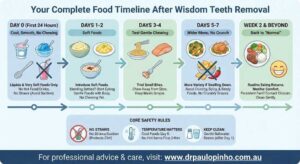
Week 2 and beyond: back to “normal”, with common-sense checks
Plenty of people feel mostly back to routine eating somewhere in the second week, but it varies. If you still have tenderness, food packing into the sockets, or pain that’s getting worse rather than better, slow down and contact your clinician. Persistent or worsening pain can be a sign something needs attention, including dry socket.
A useful way to judge readiness is to look for three signs:
- you can open your mouth comfortably (less jaw stiffness)
- chewing doesn’t trigger sharp pain
- you can keep the area clean with gentle rinsing after meals (as advised)
Also Read: Secure Smiles: A Look at the Dental Implant Procedure
Frequently Asked Questions
1) When can I eat solid food after wisdom teeth removal?
Most people start testing gentle chewing after a couple of days, then build up as it feels comfortable. Soft solids like scrambled eggs, pasta, and porridge are often the bridge between liquids and regular meals. If chewing causes pain, drop back to softer foods for another day and try again. If you had a complex extraction, your clinician may recommend a longer soft-food period. Eat soft or liquid foods until you can chew more comfortably.
2) What can I eat in the first 24 hours after wisdom teeth removal?
Choose cool or lukewarm liquids and smooth foods that don’t need chewing. Yoghurt, jelly, applesauce, and blended soups are common choices. Avoid hot foods and drinks early on, and don’t use a straw because suction can disturb the clot. Once the first day has passed, many people can move into a broader soft diet.
3) When can I use a straw after wisdom teeth removal?
It’s safest to avoid straws in the early healing phase because sucking can dislodge the blood clot and increase dry socket risk. Several reputable sources flag straws as a risk factor and advise avoiding them while the socket is forming stable healing tissue. If your dentist gives you a specific timeframe, follow that over generic advice.
4) What foods should I avoid to prevent dry socket?
Skip anything that can scrape, sting, or lodge in the wound: crunchy snacks, spicy meals, and foods with seeds. Also be cautious with fizzy drinks and anything that encourages forceful sucking or spitting, as these actions can disturb the clot. If pain increases a few days after surgery, call your clinic, as dry socket is treatable but needs proper care.
5) How long after wisdom teeth removal can I eat regular food?
Many people feel close to normal eating around the end of the first week to the second week, but it depends on swelling, jaw stiffness, and how straightforward the extraction was. A steady improvement is a good sign. If you’re still limited to very soft foods after 10–14 days, or pain is worsening, check in with your dentist or oral surgeon for tailored advice.